Pre-Marital Counselling in India: Building a Strong Foundation for Marriage
Marriage is a lifelong commitment that requires effort, understanding, and mutual respect. In India, where cultural and familial influences are deeply embedded in marital relationships, pre-marital Counselling can play a pivotal role in fostering compatibility and effective communication between partners. As modern couples face unique challenges, pre-marital Counselling in India provides the tools to navigate […]
Marriage is a lifelong commitment that requires effort, understanding, and mutual respect. In India, where cultural and familial influences are deeply embedded in marital relationships, pre-marital Counselling can play a pivotal role in fostering compatibility and effective communication between partners. As modern couples face unique challenges, pre-marital Counselling in India provides the tools to navigate these complexities and build a strong foundation for a successful marriage.
This blog explores the importance of pre-marital Counselling, the common topics discussed in sessions, and how it addresses cultural dynamics in India. Additionally, we highlight the benefits of early conflict resolution and managing expectations for a healthier marital journey.
Why Pre-Marital Counselling is Essential in India
India’s marital landscape is shaped by a blend of traditional and modern values. While arranged marriages still hold cultural significance, love marriages have become increasingly common. Regardless of the type, pre-marital Counselling helps couples:
Understand Each Other’s Expectations: Discussing financial goals, family planning, and career aspirations ensures alignment before marriage.
Enhance Communication Skills: Effective communication reduces misunderstandings and builds emotional intimacy.
Address Cultural and Family Dynamics: Counselling helps couples navigate the expectations of extended families, which often play a significant role in Indian marriages.
Identify Potential Challenges: Early discussions about differences in values, habits, and lifestyle preferences prevent future conflicts.
Common Topics Discussed in Pre-Marital Counselling Sessions
Pre-marital Counselling covers a range of topics to ensure couples are prepared for married life. Below are the most critical areas addressed:
1. Financial Planning
Money is one of the most common sources of conflict in marriages. Counselors guide couples to:
Understand each other’s spending and saving habits.
Plan for shared expenses and individual financial independence.
Discuss long-term financial goals such as homeownership or investments.
2. Family Planning
Couples discuss their preferences regarding children, including:
When to start a family.
Preferred parenting styles.
Addressing fertility concerns if needed.
3. Conflict Resolution
Disagreements are inevitable in any relationship. Counselling equips couples with:
Conflict management techniques.
Tools for active listening and empathy.
Strategies to de-escalate arguments and reach compromises.
4. Roles and Responsibilities
Modern Indian marriages often involve both partners working full-time. Counselors encourage:
Open conversations about dividing household chores.
Recognizing each partner’s professional and personal aspirations.
Sharing responsibilities to avoid burnout.
5. Cultural and Family Expectations
In India, families often play a central role in marriages. Counselling provides:
Strategies to set boundaries with in-laws.
Guidance on blending traditional values with modern perspectives.
Tools to manage differing cultural practices or religious beliefs.
6. Emotional and Physical Intimacy
Pre-marital Counselling emphasizes the importance of intimacy in a relationship, covering:
How Cultural and Family Dynamics Influence Marriage Preparation in India
Cultural and family dynamics have a profound impact on marriage in India. From wedding planning to post-marital roles, families often play an active role in shaping the couple’s life together. Below are the key aspects influenced by cultural and family factors:
1. Role of Extended Families
In many Indian households, couples live with or near their in-laws. This dynamic requires:
Open discussions about expectations for living arrangements.
Understanding each family’s traditions and customs.
Managing potential conflicts with tact and diplomacy.
2. Religious Practices
India’s diversity means couples often belong to different religious or cultural backgrounds. Counselling helps:
Navigate interfaith relationships.
Plan for religious ceremonies or rituals.
Address differences in spiritual practices respectfully.
3. Gender Roles
Traditional gender roles continue to influence many Indian marriages. Counsellors encourage:
Conversations about shared responsibilities and equality.
Challenging stereotypes that may limit personal growth.
Building mutual respect for individual aspirations.
Benefits of Addressing Expectations and Challenges Early
Pre-marital Counselling offers numerous benefits that extend beyond the couple’s relationship. Early discussions foster clarity, build trust, and prepare couples for a harmonious future. Below are some of the most significant advantages:
1. Enhanced Compatibility
Couples who undergo pre-marital Counselling report higher levels of understanding and compatibility. According to a survey conducted by a Group Therapy Clinic in Noida, 87% of couples felt better equipped to handle conflicts after attending Counselling sessions.
2. Reduced Divorce Rates
Statistics show that couples who engage in pre-marital Counselling are 30% less likely to divorce. Addressing potential issues early reduces misunderstandings and strengthens the relationship’s foundation.
3. Improved Communication Skills
Counselling provides tools to:
Express emotions clearly and constructively.
Listen actively and empathetically.
Resolve conflicts without escalating tension.
4. Stronger Family Bonds
Understanding and addressing family dynamics early strengthens the couple’s ability to manage relationships with in-laws and extended family members.
5. Building Resilience
Life is unpredictable, and challenges are inevitable. Pre-marital Counselling equips couples with the resilience needed to navigate life’s ups and downs together.
Case Study: Couple Therapy Clinic in Noida
A Couple Therapy Clinic in Noida recently worked with a young couple, Rohan and Priya, who were preparing for an interfaith marriage. Through pre-marital Counselling sessions, they:
Explored their cultural differences and found common ground.
Learned effective communication strategies to address conflicts.
Created a shared vision for their future, including family planning and career aspirations.
By addressing these issues early, Rohan and Priya entered their marriage with confidence and mutual respect.
Indian Statistics on Marriage Counselling
Below is a table highlighting key data on the effectiveness of pre-marital Counselling in India:
Metric
Value
Couples who benefited from Counselling
85%
Reduction in conflicts post-Counselling
50%
Divorce rate reduction with Counselling
30%
Sessions typically required
4-6
(Data sourced from a report by the Indian Family Counselling Association)
FAQs
1. What topics are typically covered in pre-marital Counselling in India?
Pre-marital Counselling sessions cover financial planning, family planning, conflict resolution, cultural and family dynamics, roles and responsibilities, and emotional intimacy. Each session is tailored to the couple’s specific needs.
2. How can couples in Noida access pre-marital Counselling services?
Couples in Noida can visit reputed clinics such as the Group Therapy Clinic Noida or a Couple Therapy Clinic in Noida. These clinics offer expert guidance from certified marriage therapy doctors to help couples prepare for a harmonious married life.
3. Is pre-marital Counselling necessary for arranged marriages?
Yes, pre-marital Counselling is beneficial for both arranged and love marriages. In arranged marriages, Counselling helps couples get to know each other better and align their expectations before taking the next step.
4. What is the cost of pre-marital Counselling in India?
The cost varies depending on the clinic and number of sessions. On average, pre-marital Counselling sessions range from ₹3,000 to ₹10,000 per session, with most couples requiring 4-6 sessions.
5. How does pre-marital Counselling address family dynamics in Indian marriages?
Counselors provide strategies to manage relationships with in-laws, set boundaries, and blend traditional values with modern practices. They also help couples navigate potential conflicts arising from cultural differences.
Pre-marital Counselling in India is a proactive step towards building a strong foundation for marriage. By addressing expectations, cultural dynamics, and potential challenges early, couples can foster understanding, compatibility, and resilience in their relationship. Whether you are planning a love or arranged marriage, investing in pre-marital Counselling ensures a healthier, happier future together.
The cognitive-behavioural approach to therapy (CBT) is an active, time-limited, and problem-focused method. Recognized as one of the most effective and widely used psychotherapeutic approaches, CBT primarily focuses on two key components: cognitive changes and behavioural changes.
This article delves deeper into the cognitive-behavioural approach, providing relatable examples and applications in everyday life.
Understanding Cognitive Behavioural Therapy
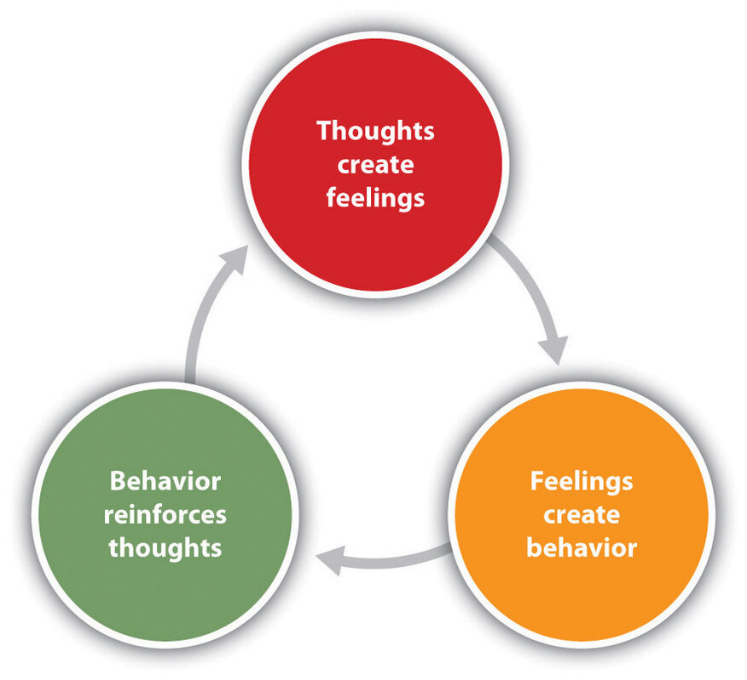
Our thoughts, emotions, and actions are interconnected, influencing one another in a dynamic cycle. This concept is central to Cognitive Behavioural Therapy.
CBT mainly aims to address dysfunctional thought patterns and replace them with healthier, constructive ones. For example, if someone consistently thinks, “I’ll never succeed,” CBT helps them challenge and reframe this belief into something more positive and realistic, such as, “Success takes effort, and I can achieve it with persistence.”
The first component is Cognitive Changes. The therapist helps the client explore and identify irrational thoughts and beliefs, guiding them toward more rational thought processes. This shift in thinking brings about positive changes in emotions and behaviours, moving the client toward mental well-being. The second component is Behavioural Changes. Therapists help and encourage clients to bring about changes in their behaviours, through a process called behavioural activation. For example, people who feel low and sad often prefer staying alone, which further pushes them into deeper feelings of depression. They are encouraged to socialize and engage in activities that lead to positive emotions. Practicing both cognitive shifts and behavioural activation together accelerates recovery.
CBT is a collaborative effort. After each session, clients are given tasks or homework. They are asked to keep a record of their thoughts, emotions, and behaviours in situations where they feel negative emotions. In subsequent sessions, therapists help them identify the irrational thoughts that lead to these emotions. Together, they work to restructure these thoughts. This process is encouraged to be practiced in daily life situations. Over time, clients feel more confident in independently handling everyday challenges, leading to positive changes and improved mental well-being.
Practical examples include managing procrastination with support from a cognitive behavioural therapy clinic near you. If you’re looking to enhance your well-being, consider reaching out to the best cognitive behavioural therapy doctor in Noida or explore online options for a CBT therapist in India. Examples of Cognitive behavioural approach in Everyday Life.
To make cognitive behaviour relatable, let’s explore some common scenarios:
Procrastination at Work or School: Imagine you have a deadline approaching, but you’re avoiding the task. Your thoughts might include, “I’m not good at this,” or “It’s too overwhelming.” These thoughts lead to anxiety and procrastination. Cognitive Shift: Reframe your thoughts to, “I can break this into smaller steps,” or “It doesn’t have to be perfect; starting is what matters.” This shift reduces anxiety and encourages action.
Social Anxiety: You’re invited to a gathering but feel nervous, thinking, “Everyone will judge me,” or “I’ll embarrass myself.” These thoughts cause you to avoid social situations, reinforcing isolation. Cognitive Shift: Challenge these beliefs by asking, “Is there evidence to support this fear?” and “Is there evidence against this fear?” . This helps us from more rational and healthy beliefs like, “People are usually focused on themselves, not judging me.”
Handling Criticism: Receiving constructive criticism might trigger thoughts like, “I’m a failure,” or “I’ll never improve.” Such thoughts can lead to feelings of inadequacy. Cognitive Shift: Reinterpret the feedback as an opportunity for growth. Think, “This is a chance to learn and get better for next time.” Applications of Cognitive Behavioural Therapy in Everyday Life
Improving Mental Health: CBT has been proven effective in treating various mental health issues, including anxiety, depression, PTSD, and phobias. Seeking support from a CBT therapist in India can provide the tools needed to address these challenges. For instance, individuals with anxiety may learn to identify catastrophic thinking (e.g., “Something terrible will happen”) and replace it with balanced thoughts (e.g., “I can handle challenges as they come”).
Enhancing Relationships: Cognitive behaviour principles can improve communication and conflict resolution. For example, instead of assuming your partner’s late reply means disinterest, you might think, “They’re likely busy, and it’s not personal.” This shift fosters understanding and reduces unnecessary conflicts.
Boosting Productivity: By addressing self-defeating thoughts, cognitive behaviour helps individuals stay motivated. A student doubting their abilities can reframe their mindset to, “I may not understand this now, but with effort, I’ll improve.”
Building Resilience: Life’s setbacks often trigger negative thought spirals. Cognitive behaviour strategies teach people to view setbacks as temporary and manageable. For example, losing a job might initially lead to thoughts like, “I’ll never find work again.” Reframing this as, “This is a chance to explore new opportunities,” can instil hope and resilience.
Role of CBT in Supporting Healthy Behaviours
CBT is one of the most effective tools for changing unhelpful thought patterns and behaviours. Sessions with the best CBT therapist online often include techniques such as:
Cognitive Restructuring: Identifying and challenging distorted thoughts.
Behavioural Activation: Encouraging activities that improve mood and reduce avoidance.
Mindfulness Training: Teaching clients to observe their thoughts non-judgmentally.
A search for a cognitive behavioural therapy clinic near me or online options can connect you with professionals skilled in these techniques.
Why Cognitive Behavioural Therapy Matters
Cognitive behavioural therapy significantly impacts emotional well-being and life satisfaction. Recognizing and addressing negative thought patterns can:
Improve decision-making: Clearer thinking leads to better choices.
For those seeking to change their unhelpful thought patterns, connecting with a qualified professional is essential. People seeking mental health support can search google by typing for a “cognitive behavioural therapy clinic near me”. Best cognitive behavioural therapist in Noida” or any location they live In India, options like consulting the best cognitive behavioural therapy doctor in Noida or finding a CBT therapist in India can provide personalized guidance. For those unable to visit in person, the best CBT therapist online can offer flexible and accessible support.
In Short Cognitive behavioural theory is the interplay between thoughts, feelings, and actions. By understanding and addressing unhelpful thought patterns, individuals can improve their mental health, relationships, and overall satisfaction with life.
Maintaining mental health is crucial for a fulfilling life. Whether you’re visiting a Holistic Wellness Clinic Noida, seeking Best Addiction Counselling through face-to-face appointments, scheduling video calls, or exploring face-to-face mental health counseling in Singapore, these strategies can help you build resilience and well-being. If you’re searching for Singapore’s Best Mental Therapy Clinic or effective Couple Therapy Solutions Singapore, start by incorporating these tips into your daily routine.
Self-Care
Prioritize quality sleep: Restful sleep for 7–8 hours each night is essential for recharging your mind and body, whether at home or after visiting a Holistic Wellness Clinic Noida.
Engage in joyful physical activities: Activities like yoga, walking, or running can boost your mood and energy. These are often recommended by experts at Singapore’s Best Mental Therapy Clinic.
Focus on nutrient-rich foods: Include whole foods like fruits, vegetables, lean proteins, and healthy fats to enhance mental and physical health.
Practice relaxation techniques: Techniques such as meditation and deep breathing, often advised during Best Addiction Counselling, can help reduce stress.
Social Connections
Nurture relationships: Build strong bonds with family, friends, or community members for a reliable support network.
Stay connected: Utilize video calls, phone calls, or in-person visits to stay in touch, as suggested in face-to-face mental health counseling in Singapore.
Engage in group activities: Joining clubs or group events can widen your social circle and improve emotional health.
Mental Stimulation
Embrace lifelong learning: Online courses, workshops, or reading can stimulate your mind, a practice supported by professionals at Singapore’s Best Mental Therapy Clinic.
Practice mindfulness: Staying present helps reduce stress and improves self-awareness.
Set achievable goals: Work toward realistic objectives to build confidence and maintain a sense of purpose.
Emotional Regulation
Recognize and express emotions: Acknowledge your feelings and communicate them in healthy ways.
Cultivate gratitude: Reflecting on things you’re thankful for daily can enhance positivity, a key takeaway from Best Addiction Counselling.
Develop problem-solving skills: Approach challenges calmly and logically to strengthen resilience.
Professional Help
Consult experts at Singapore’s Best Mental Therapy Clinic: Tailored mental health solutions can help you address specific challenges effectively.
Best Addiction Counselling: Whether through face-to-face appointments, video calls, or phone consultations, professional guidance is just a step away.
Holistic Wellness Clinic Noida: Offers comprehensive mental health solutions to enhance overall well-being.
Couple Therapy Solutions Singapore: Aimed at improving relationships and fostering emotional connection through expert guidance.
Integrating these practices and seeking help from trusted providers like Holistic Wellness Clinic Noida or Singapore’s Best Mental Therapy Clinic can significantly improve your mental health.
Mental health has become a cornerstone of overall well-being, yet it remains a topic of misunderstanding and stigma for many. Over the years, cities across India, including Noida, have seen significant developments in the availability and quality of mental health services. This blog explores how mental health services in Noida have evolved, the integration of modern therapies, the role of specialized clinics and psychologists, and how Noida is emerging as a hub for accessible mental health care.
Understanding the Importance of Mental Health Treatment
When faced with mental health challenges, the question often arises: “What is the most effective mental health treatment?” The answer varies depending on individual needs, but the most successful approaches combine psychotherapy, medication, lifestyle changes, and supportive environments. Noida’s mental health ecosystem has embraced this holistic approach, making treatment more inclusive and effective.
What Are the Four Types of Mental Health Services?
Mental health services in Noida cater to a variety of needs, typically falling into four broad categories:
Counseling Services: Offered by individual psychologists and counseling centers, these services help address stress, anxiety, relationship issues, and grief.
Therapeutic Interventions: Therapies such as Cognitive Behavioral Therapy (CBT), Dialectical Behavior Therapy (DBT), and art therapy are increasingly popular in Noida.
Psychiatric Care: For conditions requiring medical intervention, Noida has access to psychiatrists who provide medications and psychiatric evaluations.
Rehabilitation Services: For chronic or severe mental illnesses, Noida offers rehabilitation programs to reintegrate individuals into society.
These services are pivotal in answering the question: “How to heal mental health?” Effective mental health healing requires timely diagnosis, professional support, and a supportive community.
The Role of Govt Mental Hospitals in Noida and Nearby Areas
Public mental health infrastructure plays a crucial role in making services accessible to all socio-economic groups. In Noida, the mental health ecosystem is complemented by nearby Government Mental Hospitals and facilities, such as:
Govt Mental Hospital in Noida: Provides affordable care for individuals requiring psychiatric evaluation and treatment.
Mental Hospital in Greater Noida and Ghaziabad: These institutions cater to patients across Uttar Pradesh, offering services ranging from crisis intervention to long-term rehabilitation.
Government Mental Hospital in Uttar Pradesh (Agra): Known for its advanced facilities, this hospital is a major referral center for complex cases.
Mental Hospitals in Delhi: These include institutions like the Institute of Human Behavior and Allied Sciences (IHBAS), providing state-of-the-art care.
Govt Mental Hospital in Ghaziabad and Delhi: These facilities focus on accessible treatment for individuals across NCR.
The Emergence of Modern Clinics in Noida
In addition to government institutions, Noida has seen a rise in private mental health clinics that integrate traditional and modern treatment methods. These include:
Counseling centers specializing in stress and lifestyle management.
Psychotherapy clinics using evidence-based approaches like CBT and mindfulness.
Child and adolescent mental health clinics catering to younger populations.
Challenges in the Journey of Mental Health Evolution
Despite advancements, the mental health system in Noida still faces significant challenges:
Stigma and Awareness: Mental health awareness remains low, leading to delays in seeking help.
Accessibility: While private clinics are increasing, the cost remains prohibitive for many.
Workforce Shortages: A shortage of qualified mental health professionals hinders service delivery.
Efforts by government and private stakeholders aim to overcome these barriers through awareness campaigns, training programs, and subsidies for treatment.
How Noida is Becoming a Mental Health Hub
With a blend of government hospitals, private clinics, and community initiatives, Noida is rapidly becoming a mental health hub in North India. Here’s how:
Integration of Telehealth: Many clinics now offer online counseling sessions, increasing accessibility.
Focus on Community Well-being: Programs addressing workplace stress and student mental health have gained prominence.
Innovative Therapies: From virtual reality-based treatments to art therapy, Noida’s mental health professionals are adopting innovative approaches.
The Role of Mental Health Management Clinics
Mental health management clinics in Noida provide comprehensive care, addressing everything from mild anxiety to severe psychiatric conditions. These clinics employ a multi-disciplinary approach, bringing together psychologists, psychiatrists, and social workers to provide holistic care.
Conclusion: Healing Minds, Building Futures
The evolution of mental health services in Noida reflects a broader shift in attitudes towards mental well-being in India. From government hospitals in Noida and Greater Noida to specialized clinics offering advanced therapies, the city has made significant strides in providing accessible, effective care.
If you or a loved one is wondering “How to heal mental health?” remember that timely intervention, professional support, and a supportive environment are the key ingredients. Whether you seek help at a Govt Mental Hospital in Noida or a private clinic, taking the first step towards healing is crucial.
FAQs
What types of mental health treatments are available in Noida?
Treatments include individual and group counseling, psychotherapy (such as Cognitive Behavioral Therapy and psychoanalysis), medication management, and neuropsychological evaluations. Specialized therapies are offered for conditions like anxiety, depression, addiction, and postpartum mental health issues etc.
What are the most recommended mental health hospitals in Greater Noida and Ghaziabad?
Notable institutions include Kailash Hospital in Greater Noida and the Psykart Depression and Anxiety Clinic. These facilities provide comprehensive care, ranging from psychological assessments to advanced therapies for chronic mental health disorders, etc
What are the benefits of seeking mental health services in this region?
Many centers offer affordable and accessible care, with professionals skilled in diverse therapies like Cognitive Behavioral Therapy, behavior therapy, and stress management techniques. Additionally, clinics like Shanti Home provide residential facilities for long-term care and de-addiction support
Are there any government mental hospitals in Noida or nearby areas?
Government mental health facilities, such as those in Ghaziabad and Delhi, cater to a range of psychological conditions, providing affordable treatment. These institutions are particularly suitable for individuals seeking structured and cost-effective care.
How can someone book an appointment with a certified psychologist in Noida?
Platforms like Medavas and Sulekha enable online booking with certified therapists, psychologists, and psychiatrists in Noida. Patients can choose specialists based on their specific needs, location, and treatment preferences
What should one expect during a therapy session at a mental health clinic?
Sessions typically begin with an assessment of the individual’s mental health concerns, followed by a tailored treatment plan. Therapists provide a safe and confidential environment to address emotional and behavioral challenges, ensuring patient comfort and progresss.
Counsellors play a crucial role in addressing various mental health issues, providing support and guidance to individuals experiencing difficulties. Here are 10 common mental health issues that are often addressed by counsellors:
1. Depression: Counsellors help individuals navigate the feelings of sadness, hopelessness, and loss of interest that characterize depression. They may employ cognitive-behavioral therapy (CBT) or other therapeutic approaches to explore and challenge negative thought patterns.
2. Anxiety Disorders: Counsellors assist individuals dealing with various anxiety disorders, such as generalized anxiety disorder, social anxiety, and panic disorder. Techniques like relaxation training and exposure therapy may be used to manage anxiety symptoms.
3. Stress Management: Counsellors help clients identify sources of stress and develop coping strategies to manage and reduce stress levels. Stress management techniques may include time management, relaxation exercises, and setting realistic goals.
4. Relationship Issues: Counsellors work with individuals or couples to address communication problems, conflicts, and other issues impacting relationships. Couples therapy and family therapy are common approaches used to improve relationship dynamics.
5. Grief and Loss: Dealing with the death of a loved one or other significant losses can be challenging. Counsellors provide a safe space for individuals to express their emotions, navigate the grieving process, and find ways to cope with loss.
6. Substance Abuse: Counsellors assist individuals struggling with substance abuse by exploring the underlying causes of addiction and developing strategies for recovery. They may use motivational interviewing, cognitive-behavioral therapy, or 12-step programs.
7. Eating Disorders: Individuals with eating disorders, such as anorexia nervosa, bulimia nervosa, or binge eating disorder, may seek help from counsellors to address distorted body image and develop healthier relationships with food.
8. Self-Esteem Issues: Counsellors work with clients to explore and improve self-esteem and self-worth. Building a positive self-image and challenging negative self-talk are often key components of this process.
9. Trauma and PTSD: Counsellors help individuals who have experienced trauma or have post-traumatic stress disorder (PTSD). Trauma-focused therapies, such as Eye Movement Desensitization and Reprocessing (EMDR), may be employed to process and manage traumatic memories.
10. Anger Management: Counsellors assist individuals in understanding and managing their anger in a constructive way. Techniques such as cognitive restructuring and communication skills training may be used to help clients express themselves more effectively.
It’s important to note that counsellors may use a variety of therapeutic approaches based on the specific needs and preferences of their clients. Additionally, in severe cases or when medications may be necessary, collaboration with other mental health professionals like psychiatrists may be recommended.