The Unseen Architect: How Understanding Your Thoughts Unlocks Emotional Freedom
In our practice, many individuals come in feeling utterly defeated by their emotions. They often believe their anxiety, sadness, or stress is just a permanent part of who they are. They might say, “I just am a worried person,” or “The world is just too much for me to handle.” There is a key insight […]
In our practice, many individuals come in feeling utterly defeated by their emotions. They often believe their anxiety, sadness, or stress is just a permanent part of who they are. They might say, “I just am a worried person,” or “The world is just too much for me to handle.”
There is a key insight that can transform this feeling of helplessness: The source of much of emotional struggle isn’t the world outside, but a powerful, silent architect working inside our mind—cognition, or simply, our thoughts. Cognition is the way our mind takes in information, remembers it, and, most importantly, interprets it. It’s the personal filter we wear every single day. Understanding this filter is the greatest step one can take toward gaining genuine emotional freedom. It’s the powerful, foundational idea behind Cognitive Behavioral Therapy (CBT).
The Foundational Example: Why Your Filter Matters
Imagine a simple event happens to you today: Your friend doesn’t reply to your text message for five hours.
The event itself is neutral, but your mind immediately jumps in to give it meaning. Observe how two different filters change the outcome:
Your Cognitive Filter (Interpretation)
What Your Mind Says
Emotional Outcome
Filter A (Balanced)
“She must be busy. I’ll catch up with her tomorrow.”
Leads to calm and patience.
Filter B (Negative)
“She’s ignoring me. I must have annoyed her. She doesn’t like me.”
Leads immediately to anxiety and sadness.
The situation is exactly the same, yet your two possible interpretations create two completely different realities. Our emotional pain usually comes not from the event, but from the automatic, unexamined story we tell ourselves about the event.
The Silent Saboteurs: Automatic Negative Thoughts (ANTs)
Within your daily stream of thought, there are sneaky, often incorrect thoughts that pop up instantly and derail your mood. These are called Automatic Negative Thoughts (ANTs).
ANTs are immediate, non-conscious judgments that jump into your head without you even inviting them. They are often rigid and harsh. Think of phrases like:
“I always mess this up.”
“I shouldn’t have said that—I sound ridiculous.”
“Something bad is definitely going to happen.”
Because ANTs appear so quickly, we accept them as true facts. We don’t realize they are often just guesses or distortions of reality.
In therapy, the first step is learning to identify these ANTs and treating them not as harsh rules to live by, but as hypotheses to be tested. Just because you think something doesn’t mean it’s true.
Digging Deeper: The All-Powerful CBT Triangle
We often talk about the CBT Triangle because it is the master map of your inner world. It shows how three elements—Thoughts, Feelings, and Behaviors—are constantly linked and reinforce one another.
The biggest discovery of the CBT Triangle is that it’s a vicious cycle. Your thoughts don’t just cause your feelings; your feelings reinforce your thoughts, and your resulting behavior locks the whole painful pattern in place.
Let’s see this cycle in action:
Thought (Cognition): “I will definitely fail the presentation.” (An ANT)
Feeling (Emotion): High Anxiety and fear.
Behavior: You stay up all night cramming, you avoid eye contact during the presentation, and your voice shakes.
Result (Reinforcement): Because you were panicked, the presentation didn’t go smoothly. This “proves” your original thought (“I will fail”) was right, making you even more anxious for the next time.
Notice that the initial Thought is often the engine that drives the entire negative experience. Trying to tell yourself “Just stop feeling anxious” is nearly impossible. The key is to intervene where you can have control, more easily: the Thought (Cognition) corner.
The Unseen Blueprint: From Daily Thoughts to Core Beliefs
Now, let’s explore what controls those ANTs: your Cognitive Schemas, also known as Core Beliefs.
If your daily thoughts are like the conversation happening in your kitchen, your Core Beliefs are the foundation of the entire house. These are deep, often subconscious, rigid rules we developed early in life based on significant experiences.
They are the fundamental convictions you hold about yourself, others, and the world:
“I am essentially flawed.”
“I must be perfect to be loved.”
“The world is a dangerous place.”
How Core Beliefs Dictate Your ANTs:
A Core Belief acts as a perpetual, biased filter. When a neutral event happens, the Core Belief instantly triggers an ANT that serves to confirm the Core Belief, even if the ANT isn’t true.
Core Belief (Schema): “I am incompetent.”
Event: You receive simple constructive criticism on a project.
Automatic Negative Thought (ANT): “See? They finally figured out I’m useless.” (This is what we call a Cognitive Distortion—a specific type of faulty thinking—used to confirm the old belief.)
Emotion: Intense Shame and hopelessness.
The ultimate goal of deep cognitive therapy is not just to correct the surface thoughts, but to gently uncover and restructure these old, rigid Core Beliefs that keep you trapped in patterns of low mood and anxiety.
Unlocking Emotional Freedom: The Practice
Emotional freedom isn’t about being happy all the time; it’s about gaining psychological flexibility—the ability to notice a rigid thought and deliberately choose a different, more balanced response.
This begins with Metacognition: the ability to think about your own thinking.
In our work together, we invite your inner architect to pause and ask your thoughts tough, compassionate questions:
Is this thought 100% true right now? (Look for the gray area, not just black and white.)
What evidence supports the negative thought, and what evidence goes against it? (Weighing the facts.)
What is a more realistic, balanced, or kinder way to look at this situation? (The core of thought restructuring.)
By slowing down the automatic flow of your thoughts, you create a precious moment of space between the event and your emotional reaction. In that space, freedom resides. This fundamental shift—changing the inner attitude—is the greatest pathway to the emotional freedom you seek.
Introduction
Artificial Intelligence (AI) is reshaping industries worldwide, and India’s technology sector sits at the epicenter of this transformation. While AI promises efficiency, innovation, and productivity, it has also triggered an unsettling wave of layoffs. Thousands of Indian IT professionals—from entry-level coders to experienced project managers—have found themselves displaced by automation and machine learning tools that can execute tasks faster and cheaper.
Beyond financial strain, these layoffs carry a profound psychological toll. Job loss is consistently ranked as one of the most stressful life events (Holmes & Rahe, 1967), and in India’s high-pressure tech ecosystem, the ripple effects extend to self-worth, family stability, and community well-being. This article explores these impacts, introduces the concept of “quiet cracking,” and highlights strategies for resilience at the individual, organizational, and policy levels.
Quiet Cracking: The Invisible Mental Health Toll of AI-Driven Layoffs
In workplaces increasingly reshaped by AI and automation, the fallout of layoffs isn’t always loud burnout or dramatic exits. Instead, many employees experience what researchers call “quiet cracking”—a subtle yet corrosive weakening of morale, identity, and mental resilience.
Unlike “quiet quitting,” where workers reduce effort deliberately, quiet cracking describes a stealthy disengagement fueled by economic insecurity, fear of AI automation, and a lack of recognition. Employees remain in their roles physically, but mentally they feel disconnected and demoralized.
A TalentLMS survey found that 20% of U.S. workers experience quiet cracking frequently, and another 34% occasionally. While Indian-specific data is emerging, anecdotal accounts suggest the phenomenon is widespread in IT hubs such as Bengaluru, Hyderabad, and Pune, where AI-related layoffs are most pronounced.
The Mental Health Fallout of AI-Driven Layoff Anxiety
Technostress, Anxiety & Depression
A 2025 Romanian study using structural equation modeling found that AI-induced technostress significantly predicts symptoms of anxiety (β = 0.342, R² = 11.7%) and depression (β = 0.308, R² = 9.5%) (Lițan, 2025). This underscores that rapid AI integration isn’t just a technological shift—it’s a psychological one.
Widespread AI-Related Worry
The American Psychological Association (2023) reported that 38% of workers experience AI-related job insecurity affecting their mental health, with one-third rating their overall well-being below par. Media reports from India echo similar fears, with IT professionals describing sleeplessness, irritability, and hypervigilance over performance monitoring by AI-driven systems.
Personal Narratives of Quiet Cracking
Interviews compiled by Business Insiderdescribe workers facing fatigue, panic attacks, stress eating, and emotional detachment. These are quiet but cumulative symptoms that slowly erode well-being—even as employees outwardly appear functional.
Economic & Organizational Impact
The Economic Times reports that disengagement linked to quiet cracking has cost the global economy $438 billion annually, largely due to hidden productivity losses. For India, a country banking heavily on IT services exports, this translates to not only an organizational challenge but also a macroeconomic risk.
Broader Psychological Impacts of AI Layoff Anxiety
Eroded Sense of Identity: In India, where work often defines self-worth, job insecurity erodes the very foundation of identity.
Chronic Existential Anxiety: Automation forces employees to question their value beyond productivity, intensifying long-term unease.
Global Mental Health Shockwaves: High-profile layoffs at tech giants spark ripple effects, generating survivor guilt and fear among those still employed (The Guardian; The Economic Times).
The Scale of the AI Layoff Wave in India
India is home to over 5 million IT professionals(NASSCOM, 2023). With AI-driven automation spreading across customer support, software testing, and data analytics, reports suggest nearly 30% of IT roles could be disrupted within the next five years (McKinsey, 2023).
In 2024, several Indian IT firms and multinational corporations downsized teams, citing efficiency and cost competitiveness. The hardest hit were mid-career professionals balancing loans, children’s education, and family responsibilities. For this group, job loss translated directly into psychological crises.
Cultural Context: Why the Impact is Stronger in India
Social Identity Through Work: For urban middle-class families, success in IT is not just employment but status. Losing it often feels like social failure.
Stigma Around Mental Health: Despite progress, therapy is often seen as a weakness. Many laid-off employees delay seeking support.
Family & Financial Dependencies: Unlike in the West, Indian professionals often support extended families, magnifying financial and emotional strain.
Competitive Job Market: With thousands of skilled graduates entering the workforce annually, displaced employees face daunting re-entry barriers.
Strategies to Rebuild Inner Resilience
Strategy
Description
Early Detection
Watch for fatigue, irritability, withdrawal—quiet cracks are subtle.
Micro-Routines
Anchor your day with small rituals (e.g., deep breaths, grounding stretches).
Set Boundaries
Limit doomscrolling and constant job-checking.
Build Community
Peer support groups, therapy, or even safe debrief sessions deflate isolation.
Upskilling
Learning new skills reclaims autonomy and confidence.
Seek Professional Support
Therapy, wellness coaching, or digital tools can re-synchronize mind and body.
These interventions offer a path from silent fracture to secure grounding.
Organizational and Policy-Level Interventions
While individuals must build resilience, systemic changes are equally crucial.
For Organizations
Transparent Communication: Honest disclosure about AI integration reduces mistrust.
Mental Health Support: Counseling, Employee Assistance Programs (EAPs), and career transition resources can buffer distress.
Ethical Restructuring: Adequate notice, severance pay, and reskilling opportunities ensure layoffs are handled with dignity.
For Policymakers
Safety Nets: Strengthen unemployment insurance, retraining subsidies, and access to mental health care.
Reskilling Initiatives: Public-private partnerships must anticipate AI-driven labor shifts.
Awareness Campaigns: Normalize therapy and reduce stigma through national outreach.
The Role of Therapy in Rebuilding Identity
Therapy helps individuals reframe layoffs not as personal failure but as systemic change. Cognitive Behavioral Therapy (CBT) reduces catastrophic thinking, while mindfulness and somatic practices regulate stress. Group therapy fosters solidarity, reminding employees they are not alone.
Crucially, therapy supports a redefinition of identity beyond work—focusing on intrinsic values, family, and self-growth. In India’s achievement-oriented culture, this reframing is vital to long-term resilience.
FAQs
1. Why are AI layoffs impacting mental health so severely in India? Because professional success in tech is tied to identity, financial stability, and family responsibilities—making unemployment especially destabilizing.
2. Can reskilling reduce anxiety? Yes. While it doesn’t remove uncertainty, reskilling restores a sense of agency, protecting against depression.
3. What role should companies play? They must communicate openly, provide severance, and offer mental health and career transition support.
4. How can families help? By avoiding blame, validating emotions, and creating supportive daily routines that reduce isolation.
5. Which therapies are most effective? CBT for anxious thoughts, somatic practices for stress regulation, and group therapy for collective healing.
Conclusion
The AI-driven layoff wave is more than an economic adjustment—it is a mental health challenge rippling across India’s tech corridors. Addressing it requires a collective effort: individuals caring for their mental well-being, organizations restructuring with empathy, and policymakers building stronger safety nets.
Above all, India must reframe mental health as a shared responsibility. As AI reshapes the workforce, protecting the human spirit behind the job title is not optional—it is essential for sustainable growth.
Butterworth, P., Leach, L. S., Strazdins, L., Olesen, S. C., Rodgers, B., & Broom, D. H. (2009). The psychosocial quality of work determines whether employment has benefits for mental health: Results from a longitudinal national household panel survey. Occupational and Environmental Medicine, 68(11), 806–812. https://doi.org/10.1136/oem.2009.047282
Kerr, W. C., Kaplan, M. S., Huguet, N., Caetano, R., Giesbrecht, N., McFarland, B. H., … & Borges, G. (2020). Economic recession, alcohol, and suicide rates: Comparative analysis of 27 European countries. Addiction, 115(5), 937–946. https://doi.org/10.1111/add.14841
Lițan, C. (2025). Technostress and its consequences: A structural equation modeling approach. Frontiers in Psychology. https://doi.org/10.3389/fpsyg.2025
McKinsey & Company. (2023). The State of AI in 2023: Generative AI’s breakout year. https://www.mckinsey.comNASSCOM. (2023). Strategic review of India’s technology sector.https://nasscom.in
Introduction: Why Workplace Mental Health Can’t Wait
There’s a quiet crisis unfolding in Indian workplaces, one that doesn’t always show up in exit interviews or appraisal forms. It shows up in employees who stop contributing during meetings. In high performers suddenly missing deadlines. In team leads too exhausted to mentor. In that colleague who replies “I’m fine” but clearly isn’t. Burnout, chronic stress, and emotional fatigue are becoming everyday realities for a large portion of the Indian workforce.
According to Deloitte’s Mental Health Survey (2022), a staggering 80% of Indian employees reported experiencing mental health issues over the past year but only 30% sought help. That’s not a lack of awareness. That’s a lack of psychological safety.
But mental health in the workplace is not just about preventing crises. It’s about creating environments where people feel safe, seen, and supported enough to bring their best — sustainably.
In this blog, we’ll answer:
What does burnout actually look like (especially in Indian corporate settings)?
Why are conventional stress-relief strategies falling short?
How can organizations create environments where mental well-being is not a perk, but a foundation?
Let’s begin.
Section 1: What Burnout Looks Like — It’s Not Always Obvious
Burnout, defined by the World Health Organization (2019), is a state of emotional, physical, and mental exhaustion caused by prolonged workplace stress that hasn’t been successfully managed.
But in real workplaces, it often looks like:
A passionate team member turning indifferent
A manager becoming overly reactive or withdrawn
Missed deadlines despite long working hours
A once-enthusiastic employee now quietly disengaged
In Indian work culture where high performance is often equated with long hours, availability over boundaries, and “toughing it out”, burnout can be easily masked.
It’s important to understand: burnout is not laziness, incompetence, or even lack of motivation. It’s a nervous system stuck in survival mode.
Section 2: Why Common Wellness Strategies Aren’t Enough
Most companies now offer wellness webinars, yoga days, or EAPs. While these are well-intentioned, they often don’t move the needle.
Here’s why:
One-size-fits-all doesn’t work: A Zoom mindfulness session won’t reach someone silently battling trauma or family stress.
Leaders don’t model it: If managers never take breaks, employees won’t either no matter how many “wellness breaks” are announced.
No psychological safety: Employees won’t use mental health leaves or ask for flexibility if doing so risks being seen as “weak” or “unreliable.”
Focus is on productivity, not well-being: Many wellness programs are still framed as “tools to get more done,” rather than “tools to feel safe and supported.”
What’s needed isn’t more surface-level solutions but a shift in culture.
Section 3: The Cost of Ignoring Workplace Mental Health
Unaddressed stress doesn’t just harm individuals it erodes teams and organizations.
According to the McKinsey Health Institute (2023), companies with strong mental health cultures experience:
4x higher employee retention
2.5x higher employee engagement
3x more innovation and creativity
Meanwhile, burnout costs Indian companies an estimated ₹1 lakh crore annually in lost productivity, disengagement, and attrition (ASSOCHAM, 2019).
But beyond numbers, there’s a deeper cost: emotional disconnection, unspoken suffering, and the quiet erosion of trust.
Great — let’s enrich the article with about 700 more words by expanding each section while keeping it research-driven and conversational, in line with Google’s AI-mode indexing preferences.
We’ll keep the original structure but deepen explanations with data from your uploaded file and reputable sources.
Here’s the revised content from Section 4 onward:
Section 4: The Roots of Burnout (It’s Not Just Workload)
Psychologist Christina Maslach, one of the leading experts on burnout, defines it as a state of emotional exhaustion, depersonalization, and reduced personal accomplishment. But crucially, her research identifies six systemic contributors to burnout:
Workload: Not just the number of tasks but the emotional weight and mental load attached to them. Constant context-switching, emotionally demanding conversations, and unrealistic deadlines drain energy reserves faster than sheer volume.
Lack of control: Employees who have little say in how their work is structured, which projects they take on, or how success is measured are more likely to disengage. A 2021 Gallup report showed that employees who feel a sense of agency in their role are 43% less likely to experience burnout.
Insufficient reward: When contributions aren’t acknowledged — financially, verbally, or socially — it leads to emotional depletion. And this doesn’t always mean a raise; feeling invisible is just as damaging.
Breakdown in community: Isolation, workplace cliques, or unresolved team conflict can make even passionate professionals dread showing up. Studies have shown that social connection at work is one of the strongest predictors of job satisfaction and mental well-being.
Absence of fairness: Bias, favoritism, or unexplained policy shifts can undermine trust. When decisions feel opaque or rigged, employees start disengaging emotionally — even if they stay physically.
Value conflict: When personal values (like empathy, integrity, sustainability) conflict with the company’s practices (e.g., glorifying overwork or valuing only output), employees experience moral fatigue.
In Indian workplaces, these causes often play out through rigid hierarchies, lack of clarity in expectations, and a deep-seated culture of “busy is better.” Mental health is still shrouded in silence, and rest is often mistaken for laziness.
Addressing burnout starts by acknowledging it’s not a personal weakness. It’s a structural issue and fixing it requires institutional courage, not individual grit.
Section 5: How to Actually Support Mental Health at Work
True change begins with shifting how mental health is woven into workplace culture. Here’s how organizations can move from lip service to impact:
1. Normalize Conversations
Mental health should be as discussable as deadlines. Encourage team check-ins that go beyond “How’s work?” Try: 🗣️ “What’s something that’s been weighing on you this week?” 🧠 “Are there any invisible challenges you’re navigating?”
Train team leads in emotional literacy. Even a 60-minute workshop on active listening, burnout signs, and supportive language can increase psychological safety across teams.
2. Build in Flexibility
Flexibility doesn’t mean lack of structure, it means choice.
Let employees pick focus hours.
Encourage asynchronous communication where possible.
Offer wellness leaves or mental health breaks.
The Harvard Business Review found that flexibility ranked among the top 3 drivers of job satisfaction and retention, especially for millennials and Gen Z.
In India, where work-life boundaries are often blurred (especially in hybrid setups), flexibility signals trust and respect.
3. Train for Awareness, Not Just Policies
Having a mental health policy is good. But unless people know how to use it and feel safe doing so, it remains cosmetic.
Host sessions on:
How to recognize early signs of burnout
What emotional overwhelm can feel like
How to access EAPs (Employee Assistance Programs)
Make it interactive. Use case studies. Let team members role-play how they’d approach a stressed colleague. Learning happens through embodiment, not just information.
4. Embed Well-Being in Culture
Culture is built through what we reward and model.
If managers email at midnight or celebrate all-nighters, that becomes the norm. But if leaders set boundaries, take vacations, and share how they manage stress, others follow suit.
You can make emotional hygiene visible by:
Including energy check-ins in team huddles
Displaying well-being resources in common areas or Slack
Creating peer support channels or “vent rooms” for offloading stress safely
Remember: culture change doesn’t need to start at the top. It often begins in small circles of psychological safety.
5. Offer Support That Meets People Where They Are
Mental health needs differ. Someone may benefit from therapy; another may need somatic tools.
Evidence-backed support can include:
On-call mental health professionals or monthly counselling slots
Peer support or buddy systems
Somatic workshops on grounding, breathwork, or movement
Micro-break practices (like bilateral tapping or breathing zones)
According to APA (2021), programs that integrate cognitive-behavioral skills and somatic regulation yield measurable improvements in resilience and productivity.
We often ignore one major truth: our nervous system is the true seat of productivity.
When the brain is in “fight or flight,” even basic tasks feel threatening. When it’s in “freeze,” motivation and creativity shut down.
Organizations can support regulation through simple, scalable practices:
Grounding rituals before meetings: Try the 5-4-3-2-1 technique (naming 5 things you see, 4 you can touch, etc.).
Sensory pauses: Use textured objects, calming scents, or brief nature walks.
“Pause corners”: Quiet spaces for recovery after high-stakes interaction.
DBT-inspired tools: Emotion-tracking boards, distress tolerance skill decks, or reflection prompts on desks.
These aren’t therapy substitutes. They’re hygiene rituals like washing your hands, but for the mind.
And just like physical hygiene, emotional hygiene needs normalization, not shame.
Conclusion : Rethinking What It Means to Be a “Healthy” Workplace
Workplaces often pride themselves on performance, speed, and excellence but none of these are sustainable without a regulated, supported workforce. Supporting mental health isn’t a “perk” or a side project; it’s foundational to organizational resilience.
When employees feel safe, emotionally, cognitively, and physically, their creativity increases. Problem-solving improves. Collaboration deepens. Most importantly, turnover decreases and meaning at work grows.
Stress isn’t the enemy. Chronic, unsupported stress is.
Building healthier workplaces in India — or anywhere — means unlearning hustle as identity, embedding support into systems, and rehumanizing work itself.
It starts with a question not asked often enough in offices: “What helps you feel safe and seen here?”
ASSOCHAM. (2019). Preventive healthcare: Impact on corporate sector. Associated Chambers of Commerce and Industry of India.
Deloitte. (2022). Mental health and well-being in the workplace. https://www2.deloitte.com/us/en/pages/about-deloitte/articles/well-being-in-the-workplace.html
Maslach, C., & Leiter, M. P. (2016). Understanding the burnout experience: Recent research and its implications for psychiatry. World Psychiatry, 15(2), 103–111.https://doi.org/10.1002/wps.20311
McKinsey Health Institute. (2023). Addressing mental health in the workplace. https://www.mckinsey.com/mhi/our-insights/addressing-mental-health-in-the-workplace
It can be hard to notice when someone is depressed—especially when mental illness still carries stigma in many of our communities. But depression is more common than we often realize. According to the World Health Organization, one in every 20 Indians suffers from depression (WHO, 2021). It’s not just “feeling sad” or having a bad day—it’s a serious medical condition that affects thoughts, emotions, and behavior. The good news is: it’s treatable. But early recognition is key.
Depression Is Not Just About Sadness
Depression can look different in each person, and it’s not always easy to spot. In teenagers, for example, it may show up as irritability, withdrawal from friends, or a sudden drop in school performance. In adults, it might appear as chronic fatigue, low motivation, or changes in eating and sleeping patterns. Research also shows that signs like excessive anger, difficulty concentrating, and sleep disturbances are common indicators of distress in adolescents (PMC Journal).
As a psychologist with over 20 years of clinical experience, I’ve worked with many families who were unaware that what seemed like “just stress” was actually depression. Awareness can change lives.
What to Watch For: Common Signs
Here are some early warning signs to watch for in both teens and adults:
Persistent sadness, hopelessness, or crying spells
Loss of interest in previously enjoyed activities
Drastic changes in sleep (sleeping too much or too little)
Noticeable changes in appetite or weight
Withdrawal from friends or family
Constant fatigue or low energy
Feelings of worthlessness or guilt
Talking about death or expressing suicidal thoughts
These signs don’t always mean someone has depression—but if they persist for more than two weeks, it’s time to check in.
Cultural Sensitivity: Breaking the Silence
In many families in India and Singapore, mental health remains a taboo topic. Phrases like “be strong” or “don’t talk about it” only make it harder for loved ones to seek help. We must remind ourselves—and teach our children—that “it’s okay not to be okay.” Talking openly about emotions isn’t a sign of weakness. It’s a sign of strength, and often, the first step toward healing.
How to Support a Loved One
If you’re concerned about someone, approach them with compassion, not judgment. Start with a gentle conversation: “I’ve noticed you don’t seem like yourself lately. I care about you—do you want to talk about it?”
Avoid giving advice right away. Just listen. If they’re open to it, suggest professional support. In India, helplines like iCall (9152987821) offer free counselling, and Sanaroo Healthcare also provides confidential therapy services online and in-person.
A Note on the Brain
Depression isn’t just “in the mind”—it affects brain chemistry. It impacts how our brain regulates mood, motivation, and even decision-making. That’s why therapy, lifestyle changes, and sometimes medication can help restore balance.
Final Thought:
Recognizing depression early can prevent years of silent suffering. As families, we have the power to create safe, loving environments where mental health is respected and supported. Let’s start the conversation today.
For confidential consultations, reach out to Sanaroo Healthcare. You’re not alone—and help is always within reach.
Mood swings and low energy aren’t always just “growing pains” or “stress from exams.” Sometimes, they signal that someone you care about is grappling with anxiety or depression. Recognizing these signs early can help you reach out with compassion—and maybe even guide them toward professional support. Below are 10 common indicators that a friend or family member may be struggling emotionally. For each, you’ll find a brief explanation and a quick, actionable tip you can try today.
1. Persistent Sadness or Tearfulness
What to look for: They seem down most days, tear up easily, or express ongoing hopelessness. Why it matters: Chronic low mood is a core symptom of depression, not just a bad day.
Try this: Gently ask, “I’ve noticed you’ve seemed low lately—want to talk?” Your willingness to listen can make a world of difference.
2. Sudden Irritability or Anger Outbursts
What to look for: They snap at small things, have more frequent arguments, or seem unusually on edge. Why it matters: Anxiety and depression can manifest as irritability, especially in teens and young adults with poor emotional regulation PMC.
Try this: Pause before responding—then say, “I’m here if you need to vent or just need some quiet company.”
3. Withdrawal from Friends or Family Activities
What to look for: They skip gatherings, stop answering calls, or isolate themselves in their room. Why it matters: Social withdrawal is a red flag for both anxiety and depression, cutting them off from vital support networks.
Try this: Invite them for a low-key activity—one-on-one coffee, a short walk, or a shared hobby—to show you care without overwhelming them.
4. Noticeable Changes in Eating or Sleep Patterns
What to look for: They’re suddenly overeating or losing appetite, sleeping too much, or struggling with insomnia. Why it matters: Changes in appetite and sleep are hallmark signs of mood disorders; sleep disturbances and appetite shifts often co-occur with anxiety and depression PMC.
Try this: Ask if they’d like company on an evening walk or share a light meal together to gently encourage routine.
5. Excessive Worry or Panic Attacks
What to look for: They seem persistently anxious, voice catastrophic thoughts, or experience rapid heartbeat and sweating in stressful situations. Why it matters: While everyone worries, constant or overwhelming anxiety—sometimes culminating in panic attacks—is not “just stress.”
Try this: Offer to practice a simple breathing exercise together (inhale for 4, hold 4, exhale 4) to help them regain calm.
6. Frequent Headaches or Stomachaches
What to look for: They complain of tension headaches, migraines, or unexplained stomach discomfort. Why it matters: Emotional distress often “shows up” in the body—muscle tension and gut reactions are common physical symptoms of stress and anxiety PMC.
Try this: Encourage a short progressive muscle relaxation: tense-and-release each muscle group for a few seconds while seated.
7. Loss of Interest in Hobbies or Schoolwork
What to look for: They abandon activities they once loved—sports, arts, gaming—or show declining grades and concentration. Why it matters: Anhedonia (loss of pleasure) is a central feature of depression and can sap motivation across life domains.
Try this: Invite them to revisit a favorite pastime, framing it as a low-pressure chance to have fun, not “perform.”
8. Neglecting Personal Appearance or Hygiene
What to look for: Their grooming habits decline—unchanged clothes, messy hair, skipping showers. Why it matters: Skipping self-care often reflects low self-worth or overwhelming fatigue associated with depressive states.
Try this: Offer to join them in a self-care ritual—like a joint skincare routine or a fresh outfit shopping trip.
9. Expressing Feelings of Worthlessness or Hopelessness
What to look for: They verbalize “I’m a burden,” “Nothing will ever get better,” or “I’m worthless.” Why it matters: These thoughts are serious indicators of depression and can escalate if left unaddressed.
Try this: Respond with validation: “I’m sorry you’re feeling like this—your feelings matter to me. You’re not alone.”
10. Talking or Hinting About Death/Suicide
What to look for: Direct mentions of wanting to die, joking about “not waking up,” or giving away possessions. Why it matters: Any suicide-related talk is a critical warning sign that requires immediate attention.
Try this: Never leave them alone—call emergency services or a crisis helpline, and stay with them until help arrives.
Why Awareness Matters in Singapore and Beyond
According to Singapore’s National Population Health Survey, the proportion of young adults (18–29) reporting poor mental health rose from 13.4% in 2020 to 17% in 2022—with 25.3% in that age group affected CNA. Mental health struggles in youth can look like “just teenage moodiness,” but these red flags—sleep disturbances, excessive anger, and concentration difficulties—are far more concerning PMC.
Taking the Next Step: Listening, Empathy, and Resources
If you notice several of these signs persisting over weeks, consider:
Reaching out privately: “I’m worried about you. How can I support you right now?”
Encouraging professional help: Offer to help find a counselor or accompany them to a mental health clinic.
Sharing resources: In Singapore, the Samaritans of Singapore (SOS) offers 24/7 support at 1-767; in India, AASRA provides a similar helpline at +91-22-27546669. And we at Sanaroo Healthcare, provides face to face counselling in Singapore and Online counselling for India’s People.
Your empathetic presence—just saying “I’m here for you”—can break through isolation and stigma. By staying alert to these 10 signs, you become part of the safety net that helps loved ones navigate anxiety and depression toward recovery.
In today’s digital economy, employees aren’t just working—they’re juggling. Between tight deadlines, blurred work-life boundaries, remote burnout, and constant digital notifications, stress has quietly evolved into a modern epidemic.
And it’s costing us.
According to Gallup’s State of the Global Workplace 2023, 44% of employees worldwide report feeling stressed on a daily basis—the highest in recorded history. Closer to home, Deloitte’s 2022 Wellbeing at Work Survey found that over 77% of Indian employees have experienced burnout at their current jobs, yet only 33% felt comfortable speaking about it at work.
The message is clear: ignoring stress doesn’t make it go away—it makes it multiply. That’s why stress management workshops are no longer optional—they’re essential.
What Exactly Is a Stress Management Workshop?
It’s not just yoga mats and breathing techniques.
A stress management workshop is a guided, immersive session—virtual or in-person—that empowers employees to:
Understand the biology of stress
Recognize their own stress triggers
Build personalized coping strategies
Reconnect with joy, clarity, and productivity
These sessions combine science-backed tools like cognitive behavioral techniques, mindfulness, and emotional regulation with interactive games, reflective journaling, and team-based activities that make learning enjoyable.
Why Stress Management Workshops Are a Game Changer
1. Boost Productivity and Performance
Stressed employees procrastinate, disengage, and burn out. Those who learn stress regulation techniques are more focused, efficient, and motivated. In fact, companies with strong wellbeing programs report 23% higher profitability (Gallup, 2023).
2. Create a Culture of Psychological Safety
When stress isn’t acknowledged, silence takes over. Workshops give teams a safe, stigma-free space to open up, share, and connect. This leads to better communication, empathy, and trust.
3. Reduce Absenteeism and Healthcare Costs
Chronic stress is linked to heart disease, diabetes, insomnia, and anxiety disorders. Companies investing in stress management programs often report reduced absenteeism, lower insurance claims, and fewer sick days.
4. Elevate Employee Engagement and Retention
A culture that supports mental wellbeing inspires loyalty. Employees are more likely to stay, grow, and advocate for companies that care for their psychological health.
Real-World Applications: When to Bring in a Workshop
Onboarding Programs: Introduce wellbeing early in your company’s DNA.
Quarterly Wellness Weeks: Offer engaging breaks that refocus and recharge.
Leadership Retreats: Equip your managers with tools to lead under pressure.
Remote Work Support: Run virtual mindfulness, movement, and journaling sessions for distributed teams.
What Actually Happens in a Workshop?
A well-designed workshop is equal parts science, play, and reflection.
Hands-On Activities:
Stress ball making
Guided meditations
Breathing with biofeedback apps
Visualization exercises
Fun and Team-Based Games:
Mindfulness bingo
“Name your stressor” challenge
Desk yoga competitions
Conflict role-plays for managers
Digital Support:
Interactive PDFs
Journaling templates
Post-session resource kits
Recordings of virtual sessions for later use
But Wait… Do They Really Work?
Yes—and no. Here’s the honest truth:
One-off sessions are great for awareness. But transformation comes from consistency.
The most effective programs are those that are:
Tailored to your team’s unique stressors
Backed by regular follow-ups
Integrated into your broader culture strategy
That’s why we offer not just workshops—but long-term stress management training programs with assessments, tracking, and personalized tools for sustainable change.
Let’s Future-Proof Your Workplace
Stress doesn’t have to be the default setting of modern work.
By bringing stress management workshops to your organization, you’re not just protecting employee health—you’re investing in clarity, creativity, and culture.
Whether you’re an HR leader, a startup founder, or a wellbeing enthusiast—we invite you to take the first step.
Ready to empower your team with the tools they need to thrive?
📩 Sign up now for a free consultation 📅 Book your first pilot workshop today 📥 Download our full Stress Management Program Brochure
Depression is one of the most pressing public health challenges facing India today. Yet, conversations around it remain tangled in stigma, silence, and uneven access to care. This article dives deep into the current landscape of depression in India—exploring how it manifests across regions and age groups, why so many remain untreated, and what we can learn from real lives impacted by it.
Understanding the Scope: Epidemiology of Depression in India
Epidemiological studies—like those from NIMHANS and other academic institutions—estimate that 5% to 7% of India’s population experiences depression in their lifetime. Urban areas report higher rates, likely due to increased awareness and the pressures of modernization. Meanwhile, rural areas may reflect lower numbers, not because depression is rare, but due to underreporting, limited resources, and stigma.
Gender and Socioeconomic Factors
Women are especially vulnerable, often facing compounded stress from domestic responsibilities, gender inequality, and restricted access to care. Those in lower-income groups or living with chronic illnesses are similarly at elevated risk.
But perhaps the most startling statistic? Over 70% of those living with depression never receive adequate care. India’s mental health infrastructure is still catching up—with too few professionals, insufficient funding, and pervasive stigma.
“We need culturally grounded, community-based strategies to bridge the treatment gap and normalize seeking help,” says a public health expert from Delhi University.
Where Depression Hits Hardest: Regional Trends
Pinpointing the “most depressed” state in India is complicated. Kerala, for instance, often shows higher prevalence in surveys—but that may stem from better reporting and awareness rather than actual higher rates. Northeastern states, in contrast, face geographic isolation, fewer resources, and post-conflict trauma, which could contribute to higher depression levels.
Urban pockets in metros like Mumbai, Bengaluru, and Delhi also show increased cases. But these statistics may be skewed by more active diagnosis and help-seeking behavior.
Ultimately, we need standardized, nationwide studies and region-specific mental health interventions to truly understand the full picture.
Depression in 2023: Where Do We Stand?
In 2023, experts estimate that 6–7% of Indians are currently experiencing depression—a figure similar to prior years, but now shaped by post-pandemic stress and economic uncertainty.
Key Trends:
Women continue to report higher rates of depressive symptoms than men.
Young and middle-aged adults are increasingly affected.
Digital life, while spreading awareness, can worsen feelings of inadequacy and isolation.
Unfortunately, the treatment gap remains glaring: nearly 75% of people with depression do not receive professional help. And while telemedicine and digital therapy tools are growing, they are not yet a replacement for robust community-level care.
India’s Youth and the Growing Mental Health Crisis
A recent wave of research indicates that 10–15% of Indian youth—especially teenagers and those in their twenties—experience symptoms of depression.
What’s driving this?
Academic and career pressure
The influence of social media, setting unrealistic expectations
Lack of safe spaces to talk about mental health, especially in smaller towns
“I felt like everyone else had it figured out. I didn’t know how to say I was struggling,” shares Anjali, a 19-year-old college student from Pune.
In rural areas, traditional beliefs and lack of access make things even harder. The impact is far-reaching: untreated youth depression affects education, relationships, and long-term mental well-being.
What Can Help?
Counseling services in schools and colleges
Mental health clubs and peer support groups
Training teachers to recognize early signs
Stigma-reduction campaigns tailored to youth
Depression in Real Life: Three Case Snapshots
🔹 Ravi, 32, IT professional (Urban)
Living in a metro city with a demanding tech job, Ravi began feeling numb, exhausted, and disconnected. He brushed it off as stress—until it affected his performance and relationships. His family hesitated about therapy due to stigma, but with encouragement, Ravi eventually sought professional help. A combination of talk therapy, medication, and daily mindfulness practices helped him recover.
🔹 Rekha, 45, homemaker (Rural South India)
Rekha developed postpartum depression after the birth of her second child. Dismissed by family as “weakness,” her condition worsened until a local ASHA worker noticed her symptoms. With basic counseling support and a referral to a district mental health center, Rekha gradually regained emotional balance. Her case shows the power of community health workers.
🔹 Imran, 21, student (North-East India)
Facing peer pressure, academic anxiety, and social isolation after moving for college, Imran began withdrawing from friends and skipping classes. His hostel warden referred him to the campus counselor. After several sessions, Imran learned to manage his anxiety and depression through journaling, cognitive techniques, and a structured routine.
These stories show that while the triggers may vary, the path to healing often includes early detection, supportive systems, and reducing stigma.
Moving Forward: What Can We Do?
The battle against depression in India is as much social as it is clinical. Addressing it means:
Normalizing conversations around mental health at home, work, and schools
Expanding access through public mental health programs and digital tools
Supporting caregivers and community leaders with mental health literacy
Advocating for policy reform and increased mental health funding
If You or Someone You Know Needs Help:
iCall (TISS): +91 9152987821
AASRA: 91-22-27546669 / 91-22-27546667
Vandrevala Foundation Helpline: 1860 266 2345
Seeking help isn’t a sign of weakness—it’s a step toward reclaiming your strength.
Final Thoughts
Depression in India is no longer an invisible issue. With growing awareness, brave conversations, and culturally rooted solutions, there is hope—not just for treatment, but for transformation. Let’s listen, support, and speak up.
References (APA Style)
National Institute of Mental Health and Neurosciences (NIMHANS). (2016). National Mental Health Survey of India, 2015–16: Summary. Bengaluru: Ministry of Health and Family Welfare, Government of India. Retrieved fromhttps://nimhans.ac.in/national-mental-health-survey-of-india-2015-16/
Indian Council of Medical Research (ICMR), Public Health Foundation of India, & Institute for Health Metrics and Evaluation. (2017). India: Health of the nation’s states – The India state-level disease burden initiative. Retrieved fromhttps://www.icmr.gov.in/
Patel, V., Saxena, S., Lund, C., Thornicroft, G., Baingana, F., Bolton, P., … & Unützer, J. (2016). The Lancet Commission on global mental health and sustainable development. The Lancet Psychiatry, 3(10), 975–987.https://doi.org/10.1016/S2215-0366(16)30146-4
Tata Institute of Social Sciences. (n.d.). iCall psychosocial helpline. Retrieved fromhttps://icallhelpline.org/
AASRA Foundation. (n.d.). 24/7 mental health helpline. Retrieved fromhttp://www.aasra.info/
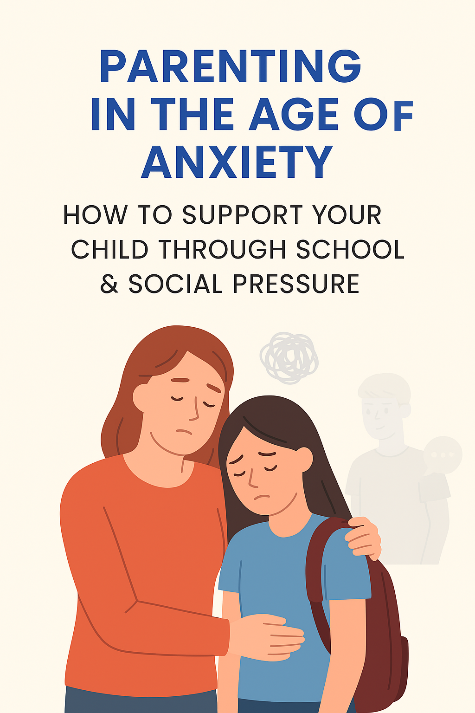
In today’s, the challenges our children face extend far beyond traditional academic pressures. With technology at our fingertips, social media influencing self-worth, and the relentless pace of modern life, our kids are increasingly exposed to sources of anxiety and stress. As a psychological expert, I have observed that effective parenting in this era means not only addressing academic needs but also fostering emotional resilience and psychological well-being. This comprehensive guide offers insights and actionable strategies to help parents support their children as they navigate the complexities of school and social pressures.
Understanding Modern Childhood Stress
Modern children and adolescents are growing up in a world where the expectation for academic excellence is intertwined with the constant connectivity of digital life. The pressures of competitive school environments, coupled with the omnipresent influence of social media, can lead to a heightened state of anxiety. Research indicates that chronic stress in children can impair cognitive function, hinder emotional regulation, and even affect physical health. These findings underscore the urgent need for parents to become proactive in mitigating these stressors.
The Impact of School Pressure
For many students, academic success is not just a personal goal—it’s a prerequisite for future opportunities. The burden of high expectations, standardized testing, and college admissions can create a constant sense of pressure. Children often internalize these pressures, leading to anxiety that manifests as perfectionism, fear of failure, and self-doubt.
The Social Media Dilemma
Social media platforms offer a double-edged sword. While they provide avenues for creativity and connection, they also expose children to relentless comparison, cyberbullying, and unrealistic portrayals of success. The curated nature of online lives can distort self-perception and amplify feelings of inadequacy. In this digital era, parents must help their children develop a balanced perspective on online interactions and maintain a healthy self-image.
The Role of Parents in Navigating Anxiety
Parents are the cornerstone of emotional support. Your role as a caregiver extends into the realm of mental health, where modeling calm, resilience, and empathy can profoundly influence your child’s response to stress. Here are several strategies that can empower both you and your child to navigate the turbulent waters of modern anxiety.
1. Foster Open Communication
Creating a safe space for dialogue is crucial. Encourage your children to share their fears, concerns, and experiences without the fear of judgment or immediate correction. When children feel heard and validated, they are more likely to express their anxieties and work through them collaboratively with you.
Effective Strategy: Establish regular “talk time” during the day or week where you can discuss emotions, challenges, and successes. Listen actively and empathize with their feelings rather than dismissing or minimizing their experiences.
2. Model Healthy Stress Management
Children learn by observing. Your behavior sets a powerful example of how to handle stress. By openly discussing your own stress management techniques—such as mindfulness, exercise, or creative outlets—you provide a practical roadmap for your child to emulate.
Effective Strategy: Share your daily routine that includes moments of relaxation, meditation, or even simple breathing exercises. Explain how these practices help you stay grounded during stressful times, and consider engaging in them together as a family.
3. Encourage a Balanced Lifestyle
A well-rounded life is the antidote to anxiety. While academics and digital engagement are important, so too are physical activities, creative pursuits, and downtime. Encourage your child to pursue hobbies, spend time outdoors, and maintain a balanced schedule.
Effective Strategy: Develop a family schedule that includes designated times for study, play, and relaxation. Ensure that there is ample time away from screens and that physical activities are a regular part of the daily routine.
4. Set Realistic Expectations
The pressure to achieve perfection can be debilitating. Help your child understand that it’s okay to make mistakes and that failure is an essential part of growth. By setting realistic expectations, you help alleviate the internalized pressure to be flawless.
Effective Strategy: Celebrate effort over outcomes. Focus on progress and learning rather than just grades or accolades. Remind your child that every experience, whether successful or not, is a stepping stone toward personal growth.
Specific Techniques for Building Resilience
Resilience is not an innate trait—it is cultivated over time through experience, guidance, and support. Below are several practical techniques that can help build emotional resilience in your child:
Mindfulness and Meditation
Mindfulness is a powerful tool for managing anxiety. It encourages present-moment awareness and helps children detach from overwhelming thoughts and feelings. Teaching mindfulness can help reduce anxiety by promoting a calm, focused state of mind.
Effective Strategy: Introduce short, guided meditation sessions into your child’s routine. There are many apps and online resources specifically designed for children that offer simple mindfulness exercises.
Cognitive Behavioral Strategies
Cognitive Behavioral Therapy (CBT) techniques can help your child identify and challenge negative thought patterns. By reframing these thoughts, your child can develop a more balanced perspective on stressful situations.
Effective Strategy: Encourage your child to keep a journal where they note down negative thoughts and then write alternative, more positive perspectives. This practice helps in recognizing cognitive distortions and replacing them with constructive insights.
Emotional Regulation Skills
Helping your child understand and manage their emotions is key to reducing anxiety. Techniques such as deep breathing, visualization, and even physical exercise can be effective in regulating emotional responses.
Effective Strategy: Teach your child simple deep-breathing exercises. For instance, the “4-7-8” technique—inhaling for 4 seconds, holding for 7 seconds, and exhaling for 8 seconds—can be a practical tool during moments of stress.
Social and Emotional Learning (SEL)
Incorporating social and emotional learning into daily life can significantly enhance a child’s ability to manage stress. SEL programs in schools have shown great success in improving emotional intelligence and reducing anxiety.
Effective Strategy: Engage in family activities that promote empathy, collaboration, and problem-solving. Discuss scenarios from daily life where emotional intelligence played a key role in resolving conflicts or overcoming challenges.
How Parents Can Take Action: Practical Steps
As a parent, there are several proactive measures you can adopt to support your child in the age of anxiety:
Create a Stress-Relief Environment at Home: Dedicate a space in your home where your child can unwind—a quiet corner with calming decor, soft lighting, and a selection of stress-relief tools such as books, puzzles, or art supplies.
Monitor and Moderate Digital Exposure: While technology is an integral part of modern life, it is essential to set boundaries. Limit screen time and encourage offline activities that promote creativity and physical activity.
Collaborate with Educators: Work closely with your child’s teachers to ensure they are aware of the pressures your child faces. Advocate for mental health programs and stress management workshops in schools, and stay informed about the school’s policies on academic pressure and mental health.
Seek Professional Support When Needed: If you notice persistent signs of anxiety that interfere with your child’s daily functioning, don’t hesitate to consult a mental health professional. Early intervention can prevent minor issues from escalating into more serious conditions.
Engage in Community and School Programs: Look for opportunities to participate in workshops, seminars, and support groups that focus on stress management for children and adolescents. These programs not only offer practical tools but also create a network of support among parents facing similar challenges.
Educate Yourself Continuously: Stay informed about the latest research on childhood stress and anxiety. Understanding the underlying causes and effective strategies can empower you to better support your child.
In Short
Parenting in the age of anxiety requires vigilance, empathy, and proactive engagement. In 2025, the pressures of academic expectations, social media, and evolving societal norms have made stress a pervasive part of a child’s life. However, by embracing effective stress management strategies, parents can create an environment where their children not only survive but thrive.
From fostering open communication and modeling healthy stress management behaviors to incorporating mindfulness, cognitive behavioral techniques, and balanced lifestyles, every step you take can significantly enhance your child’s resilience. In doing so, you help them build the emotional toolkit necessary for navigating life’s challenges—preparing them not just for academic success but for a fulfilling, balanced future.
Remember, the journey to a stress-resilient generation begins at home. Your active involvement, informed guidance, and compassionate support can transform the way your child experiences and responds to stress. Embrace the challenge, and empower your child with the knowledge and tools to overcome anxiety, leading them to a healthier, happier, and more productive life.
FAQs
Q1. At what age should children start learning stress management techniques? Research suggests that even young children can benefit from simplified stress management practices. Starting around ages 6-7, children can learn basic mindfulness and deep-breathing exercises that grow with them.
Q2. How can parents effectively limit digital stressors without restricting academic use of technology? It’s all about balance. Set clear rules for recreational screen time while allowing digital tools for educational purposes. Encourage offline activities and lead by example with your own digital habits.
Q3. What signs indicate that my child might need professional help for stress or anxiety? Persistent changes in behavior, sleep disturbances, withdrawal from social activities, and a noticeable decline in academic performance are red flags. If these signs persist, consult a mental health professional.
Q4. Can stress management skills really improve academic performance? Yes, by reducing anxiety and improving concentration, stress management skills can help children perform better academically while also enhancing their overall well-being.
By implementing these strategies and nurturing an open, supportive home environment, you are taking a critical step toward empowering your child to face today’s challenges with confidence and resilience.
In 2025, students are facing mounting stress from academics, social media, career pressure, and uncertainty. Discover how stress management workshops can support students and what actions parents can take to ensure their child’s mental well-being.
Introduction
In the innovative world of 2025, students are under more pressure than ever before. Academic competition, technology overload, social expectations, and uncertainty about the future are contributing to unprecedented levels of stress. The consequences? Increased anxiety, depression, burnout, and even physical health problems. To address this growing crisis, stress management workshops tailored for students are proving to be a powerful solution. These workshops not only equip students with tools to manage stress but also foster emotional resilience, better academic performance, and improved overall well-being.
Why Are Students Stressed in 2025?
Academic Pressure: With competitive exams, GPA goals, and pressure to get into top colleges, students often feel they are constantly racing against time.
Technology & Social Media Overload: While tech is beneficial for learning, constant screen time and social comparison on social media lead to low self-esteem, sleep disturbances, and digital burnout.
Career Uncertainty: The job market is transforming rapidly. AI and automation are changing career paths, making students anxious about their future.
Parental & Societal Expectations: In many households, there is a constant pressure to perform and excel, leaving little room for failure, creativity, or exploration.
Peer Pressure and Bullying: Social acceptance continues to be a major issue, especially in the digital age where cyberbullying is on the rise.
Lack of Emotional Education: Schools still prioritize academic intelligence over emotional intelligence, leaving students with poor coping mechanisms.
Climate Anxiety & Global Events: Exposure to global crises like pandemics, wars, and climate change adds to an underlying sense of fear and helplessness.
How Stress Affects Students
Chronic stress in students manifests in multiple ways:
Poor concentration and memory
Decreased academic performance
Insomnia and fatigue
Irritability and mood swings
Anxiety and depression
Withdrawal from friends and activities
Physical issues like headaches or stomach aches
Without proper intervention, these issues can snowball into long-term mental health problems.
The Power of Stress Management Workshops
Stress management workshops are more than just breathing exercises or yoga sessions. Modern workshops in 2025 use science-backed methods and are designed specifically for students. Here’s how they help:
Mindfulness & Meditation: Helps students become aware of their thoughts, reduce overthinking, and live in the present moment.
Cognitive Behavioral Techniques (CBT): Students learn how to reframe negative thoughts and develop a growth mindset.
Time Management & Prioritization: They learn how to set achievable goals and avoid procrastination.
Emotional Regulation: Workshops teach students how to manage emotional highs and lows.
Building Resilience: Students learn to handle failures and setbacks positively.
Group Interaction & Support: Interacting with peers facing similar struggles creates a sense of community and reduces feelings of isolation.
Physical Wellness Techniques: Incorporating nutrition, exercise, and sleep hygiene into stress management.
What Role Can Parents Play?
While workshops can provide techniques and peer support, parents remain a critical pillar in a student’s emotional framework. Here’s how parents can take proactive action in 2025:
Encourage Open Conversations: Foster an environment where children feel safe discussing their stress without fear of judgment or punishment.
Attend Awareness Sessions: Parents can join orientation or awareness sessions offered alongside student workshops to understand what their child is learning.
Model Healthy Stress Management: Children learn by example. Parents who manage their own stress healthily can inspire their kids.
Limit Screen Time at Home: Set tech boundaries and encourage offline time, hobbies, or outdoor play.
Watch for Warning Signs: Be alert for behavioral changes, sleep issues, or social withdrawal that might indicate elevated stress.
Prioritize Emotional Intelligence at Home: Instead of only asking about grades, ask how your child feels. Help them label emotions and talk through them.
Support Not Pressure: Be a cheerleader, not a taskmaster. Support your child’s interests and passions even if they don’t align with societal expectations.
Encourage Participation in Workshops: Parents can motivate their kids to take these programs seriously and practice the tools learned consistently.
The Future Benefits: A Stress-Resilient Generation
Investing in stress management at a young age pays off in multiple ways:
Better academic results
Improved mental health
Higher self-confidence
Healthier relationships
Ability to handle future life challenges
Reduced risk of addiction and self-harm
These are not just skills for today but life tools that can empower students throughout their academic journey and into adulthood.
In Short
In 2025, student stress isn’t just an individual issue—it’s a societal challenge. But with the right interventions like stress management workshops and conscious parenting, we can transform stress into strength. These tools don’t just reduce anxiety; they build resilience, clarity, and confidence in our youth. Let’s equip our students not just for exams, but for life.
FAQs
Q1. At what age can students start attending stress management workshops? Most workshops are designed for ages 10 and above, but simplified techniques can be introduced as early as 6 or 7 years old.
Q2. How long do stress management workshops usually last? Workshops can range from 1-day intensives to weekly programs over several months, depending on the depth of content and student availability.
Q3. Are online workshops effective? Yes, when structured well, online sessions can be just as impactful as in-person ones, especially with interactive elements like breakout rooms, live exercises, and follow-ups.
Q4. How can I convince my child to attend a workshop? Focus on benefits like better sleep, confidence, and concentration. Avoid framing it as a “fix” and instead position it as a helpful tool everyone can use.
Introduction: Why Stress Management Matters More Than Ever
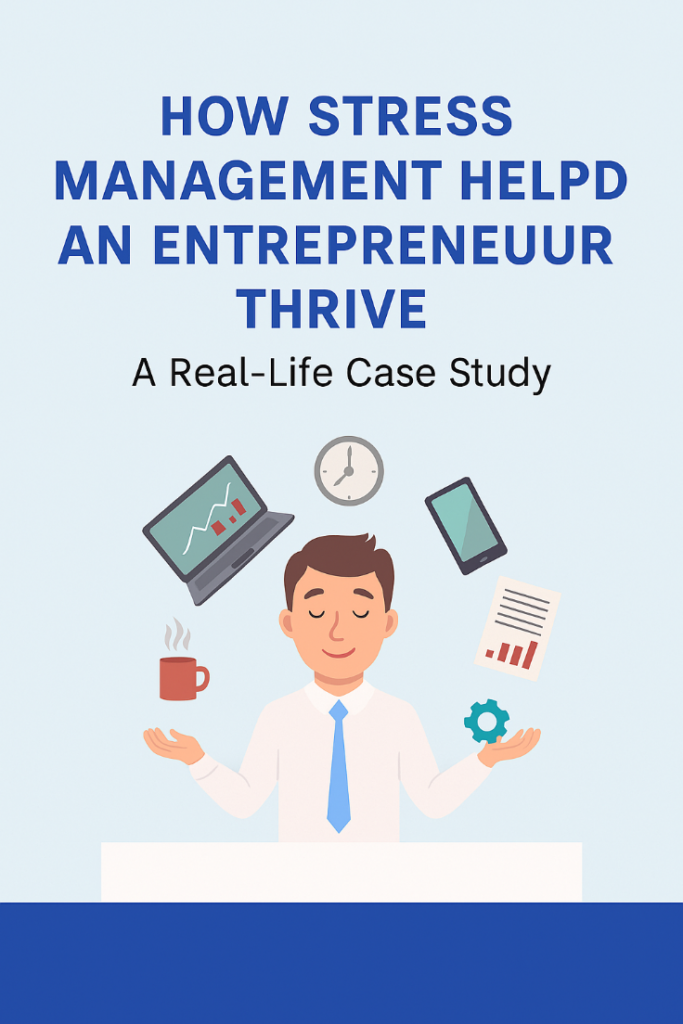
In today’s environment, entrepreneurs are constantly juggling multiple roles, deadlines, and expectations. While the hustle is glorified, it often comes at the cost of mental and physical health. Chronic stress doesn’t just affect your mood – it eats away at your creativity, productivity, and overall well-being. This case study highlights how one entrepreneur, Aisha, turned her life around using a stress management plan that anyone can adopt.
Meet Aisha: The Classic Case of the Overwhelmed Entrepreneur
Aisha is a passionate startup founder with a strong vision. Like many entrepreneurs, she wore multiple hats: CEO, marketer, strategist, and problem-solver. Her dedication was admirable, but it came at a cost.
The Challenge:
Despite her enthusiasm and drive, Aisha faced:
Chronic fatigue
Constant anxiety
Difficulty making decisions
Struggles with work-life balance
The Breaking Point:
Eventually, her stress began to affect her performance:
Productivity sharply declined
Burnout symptoms emerged
Creativity and decision-making abilities suffered
Aisha knew something had to change.
The Turning Point: Discovering Stress Management
Rather than waiting for a breakdown, Aisha decided to proactively take control. She signed up for a structured Stress Management Workshop, where she learned that managing stress isn’t just about reducing workload. It’s about changing your relationship with stress.
Reality-Check Techniques: Challenging unhelpful beliefs that created mental pressure
Mindfulness & Breathing Exercises: Practicing daily moments of calm
Setting Boundaries: Creating a structured work schedule and learning to say no
These small shifts had a massive impact.
The Results: A Powerful Transformation
Within weeks of consistent effort, Aisha noticed a remarkable transformation:
Increased mental clarity and motivation
Better emotional resilience
Sharper decision-making skills
A healthier and more sustainable work-life balance
Her Key Realization:
“I realized stress isn’t just about workload – it’s about how I perceive and respond to it.”
Why This Workshop Could Be a Game-Changer for You Too
Stress is inevitable, especially if you’re driven and ambitious. But how you manage it can make or break your career. This workshop is designed not just to help you manage stress, but to help you harness it to your advantage.
What You’ll Learn:
Daily habits to build long-term emotional resilience
How your thoughts shape your stress response?
Practical techniques for boosting productivity and creativity
Proven tools to reclaim your energy and focus
If Aisha could turn her stress into success, so can you.
Join Our Stress Management Workshop
Transform how you handle pressure, enhance your productivity, and reclaim your peace of mind. This is not just a workshop; it’s an investment in your personal and professional success.
Contact Us Today: 📞 +91 99105 52928 📩 contact@sanaroohealthcare.com
FAQs
Who is this workshop for? Anyone feeling overwhelmed by stress – entrepreneurs, professionals, students, or homemakers. If you want to gain better control over your emotions and productivity, this is for you.
Do I need prior knowledge or experience? No. This workshop is designed for everyone, regardless of background or experience.
What makes this workshop different? It focuses on actionable, science-backed tools you can use immediately – not just theory.
Is it an in-person or online workshop? Both options are available! Join from the comfort of your home or attend in-person to get the full experience.